Eat The Grease vs Effective Microbes
Eat The Grease
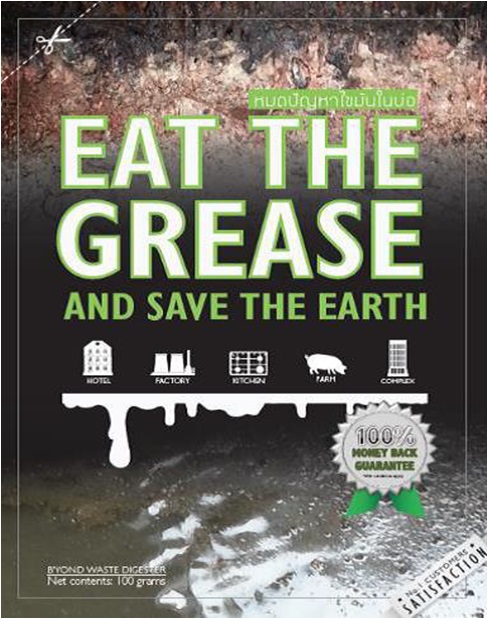 Effective Microorganisms (EM) and Eat the Grease (ETG) are two different types of biological treatments that can be used to degrade organic matter and reduce odors in wastewater.
EM is a mixture of naturally occurring beneficial microorganisms, including bacteria, fungi, and yeasts, that can help break down organic matter and improve soil quality. When used in wastewater treatment, EM can help improve the performance of biological treatment processes and reduce odors.
ETG, on the other hand, is a blend of bacterial strains that are specifically designed to degrade fats, oils, and grease (FOG) in wastewater. ETG can be used to improve the performance of grease traps and interceptors, reducing the amount of FOG that enters the wastewater treatment system.
While both EM and ETG can be effective at reducing organic matter in wastewater, they target different types of organic matter. EM can be used to break down a wide range of organic compounds, including those found in wastewater, soil, and compost, while ETG specifically targets FOG in wastewater.
Additionally, the application of EM and ETG may differ depending on the specific treatment goals and the characteristics of the wastewater. EM is typically applied as a liquid or spray directly into the wastewater, while ETG may be applied as a powder or tablet in the grease trap or interceptor.
Ultimately, the choice between EM and ETG will depend on the specific wastewater treatment needs and goals. It is recommended to consult with a wastewater treatment professional to determine the most appropriate treatment methods for a specific wastewater effluent.
Liquid Enzymes vs Powder Microbe Enzymes
- Composition
- Liquid Enzymes:
- Contain free enzymes (proteins) dissolved in a liquid carrier
- Do not contain living organisms
- Powder Microbe Enzymes:
- Usually contain dormant or encapsulated microbes (e.g., Bacillus spp.)
- These microbes produce enzymes when activated by moisture and nutrients
- Liquid Enzymes:
- Mode of Action
- Liquid Enzymes:
- Act immediately upon application
- Enzymes start breaking down organic matter (e.g., fats, grease, protein)
- Powder Microbe Enzymes:
- Require activation time (often minutes to hours)
- Microbes grow and multiply, producing enzymes over time for continuous cleaning/degradation
- Liquid Enzymes:
- Shelf Life and Stability
- Liquid Enzymes:
- Generally shorter shelf life
- Sensitive to temperature and storage conditions
- Powder Microbe Enzymes:
- Longer shelf life (especially in powder or tablet form).
- More stable in storage and easier to transport.
- Liquid Enzymes:
- Application Areas
- Liquid Enzymes:
- Immediate cleaning jobs, drain maintenance, odor control
- Powder Microbe Enzymes:
- Long-term treatment: grease traps, wastewater systems, septic tanks, composting, bioaugmentation
- Liquid Enzymes:
- Cost and Efficiency
- Liquid Enzymes:
- Higher initial cost for fast results
- Effectiveness drops quickly once enzymes degrade
- Powder Microbe Enzymes:
- More cost-effective for long-term use.
- Self-replicating microbes provide sustained enzyme production.
- Liquid Enzymes:
| Feature | Liquid Enzymes | Powder Microbe Enzymes |
|---|---|---|
| Contains Microbes? | No | Yes |
| Action Time | Immediate | Slower start, long-term action |
| Shelf Life | Shorter | Longer |
| Stability | Less stable | More stable |
| Best For | Quick fixes | Continuous treatment |
| Cost Over Time | Higher | Lower |
Contact us
Every application have different capacity, daily operation, and community behaviours. Therefore, application, dosage, and methodologies of the microbes need to be customised accordingly. And, normally its recommended to trial for at least 2 to 4 weeks, before a Standard Operating Procedure is designed.
email : sales [at] cemax [dot] com [dot] my
whatsapp : +60 16 207 5400